
Life Cycle and Habits of Common Household Pests
If you live in Phoenix or Tucson, you know that pests aren’t just a nuisance; they’re practically part of the desert landscape. From roaches in the kitchen to mice hiding in the attic, these intruders have habits and life cycles that help them survive and thrive in your home.
Understanding how they live, reproduce, and behave can give you a leg up in keeping them out. Let’s break down the most common household pests in our region.
What This Article Covers
- The most common pests homeowners see in Phoenix and Tucson
- The life cycles that drive infestations
- Behavioral habits that let pests survive in and around homes
- Practical tips to prevent and manage infestations
Cockroaches: The Nighttime Snackers
Cockroaches are probably the most infamous household pests in Arizona, and for good reason; they’re survivors.
Species you’ll see locally:
- German cockroaches: Small, tan, and primarily found in kitchens and bathrooms.
- American cockroaches: Bigger, reddish-brown, often seen in garages or basements.
Life cycle:
- German cockroaches: About 100 eggs per female, hatching in 28–30 days. They grow quickly, reaching adulthood in roughly 6 weeks.
- American cockroaches: A bit slower, taking about 6 months to reach adulthood.
Habits:
- Nocturnal—most activity happens at night.
- They scavenge for food and water, which is why crumbs, pet food, and leaky faucets are irresistible to them.
- They’re fast breeders: one female can produce hundreds of offspring in a single year.
Tips for homeowners:
- Keep food sealed and surfaces clean.
- Fix leaks—moisture is their lifeline.
- Seal cracks and gaps around doors, windows, and pipes.
Ants: Tiny But Persistent
In the desert Southwest, ants are everywhere, from your backyard to the kitchen counter.
Common culprits:
- Argentine ants: Small, light brown, travel in long lines.
- Pavement ants: Often found around foundations and driveways.
Life cycle:
Queen ants can live for several years, producing thousands of workers.
Eggs hatch into larvae, then pupae, before emerging as adults. Complete cycle: 4–6 weeks, depending on temperature.
Habits:
- They form trails to food sources, which is why you’ll often see them marching in a straight line.
- Many species will enter homes in search of food and water, especially in spring and summer.
Tips for homeowners:
- Store sugary and greasy foods in sealed containers.
- Keep outdoor plants trimmed back from the house.
- Repair or seal gaps around foundations, doors, and windows.
Mice: Quiet, Clever Intruders
Mice are quiet, clever intruders that can sneak into your home undetected, and once inside, they can cause significant damage.
Behavior:
- Mice are nocturnal, mostly active at night.
- They gnaw on just about everything to keep their teeth in check, including wires, cardboard, and wood.
- They’re excellent climbers and can squeeze through holes as small as a dime.
Life cycle:
- A single female can produce 5–10 litters per year, each with 4–12 pups.
- Babies mature in just 6–8 weeks, which is why infestations can explode quickly.
Tips for homeowners:
- Seal gaps around vents, doors, and the foundation.
- Keep food stored in metal or thick plastic containers.
- Remove clutter where mice can nest, like boxes or piles of laundry.
Termites: Wood-Destroying Insects
Termites aren’t just a problem in humid regions—they thrive in Arizona too, especially subterranean termites that can quietly damage your home’s structure.
Behavior:
- Feed on wood, drywall, and other cellulose-based materials.
Work (i.e., damage) is often not visible and is typically located inside walls or under the outer layer of wood.
Life cycle:
- A colony starts with a queen and king; colonies can contain thousands of workers.
- Eggs hatch into nymphs, which grow into workers, soldiers, or reproductive termites.
- Colonies can survive for years if left untreated.
Signs of activity:
- Mud tubes along foundation walls or wooden structures.
- Hollow-sounding wood or sagging doors.
- Swarmers (winged termites) inside or outside the home during spring.
Tips for homeowners:
- Reduce wood-to-soil contact around your home.
- Fix leaks and maintain proper drainage to limit moisture.
- Schedule professional termite inspections annually.
Spiders: The Quiet Predators
Spiders are generally harmless, but a few species in Arizona are venomous and can pose a risk.
Common species:
- Black widows: Shiny black with a red hourglass, prefer dark, undisturbed areas.
- Wolf spiders: Large, hairy, roam at night hunting for insects.
Life cycle:
- Female spiders lay hundreds of eggs in sacs, which can hatch in a few weeks.
- Most spiders live for 1–2 years; some, like black widows, may survive several seasons.
Habits:
- They love quiet, undisturbed areas, such as closets, garages, and woodpiles.
- Most are nocturnal hunters or web builders, waiting for prey to wander into their trap.
Tips for homeowners:
- Keep storage areas tidy and elevated off the ground.
- Shake out shoes, clothes, and towels stored in dark corners. Seal cracks around doors and windows to reduce entry points.
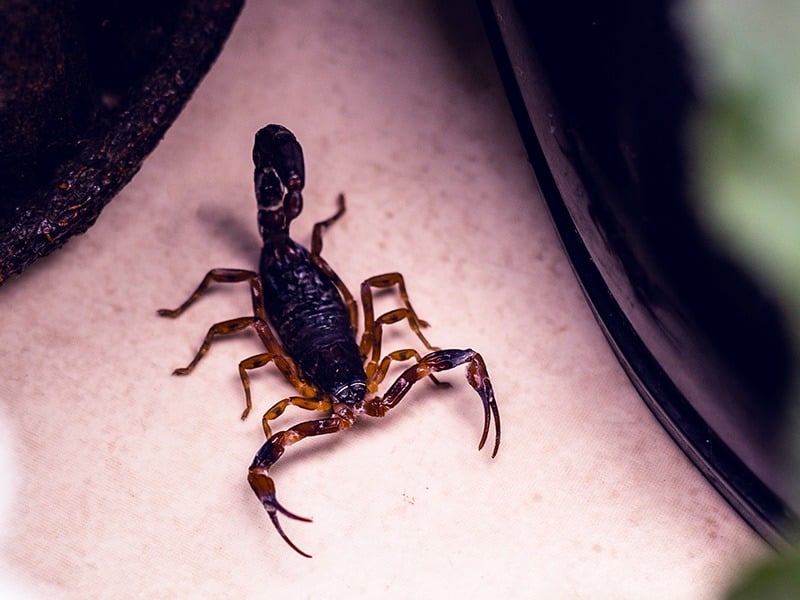
Scorpions: The Desert Nighttime Hunters
Yes, scorpions are more than a desert legend; they’re a genuine concern in homes in Phoenix, Tucson, and Southern Arizona.
Common species:
- Arizona bark scorpions: Small, highly venomous, seek cool, dark hiding spots.
- Striped bark scorpions: Less venomous but still a stinger to watch out for.
Life cycle:
- Females give live birth to 20–40 young, which ride on their mothers’ backs until the first molt.
- Depending on the species, scorpions live 4–6 years on average, molting several times during their growth.
Habits:
- Nocturnal hunters, feeding on insects.
- Hide under rocks, woodpiles, and inside cracks or cluttered garages.
Tips for homeowners:
- Keep firewood several feet away from the house.
- Remove yard debris.
- Seal cracks in foundations, walls, and around doors.
- Install weather stripping on doors and windows.
How to Protect Your Phoenix or Tucson Home from Household Pests
Understanding pests' life cycles is just the first step; prevention and professional treatment are key. Northwest Exterminating offers comprehensive pest control solutions designed for Arizona homes. Our service offerings include, but are not limited to:
- Ongoing home pest control plans that target common house-infesting insects and rodents
- Termite control services featuring the Sentricon® System with Always Active™ technology
- Rodent control for mice and rat elimination
- Desert Guard, an insect and rodent exclusion service
With highly trained and fully licensed technicians who understand the behaviors and life cycles of local pests, Northwest Exterminating protects your home and family from nuisance and potentially harmful pests.
Take Action: Keep Your Arizona Home Pest-Free
Don’t wait until pests become a problem. Whether it’s a single scorpion in the garage, a trail of ants across the counter, or signs of mice in the attic, early action makes all the difference.
Request your free pest consultation with Northwest Exterminating today and enjoy peace of mind in your Phoenix or Tucson home all year.

Testimonials
Request Your FREE Estimate
Have questions or need help getting rid of pests? Simply complete the form below or give us a call!
Pest Solutions For Homes & Businesses
Northwest Exterminating provides pest control services in the Phoenix metro and Tucson, as well as throughout Southern Arizona, that target pests found in our region's unique desert environment. We promise personalized service and state-of-the-art techniques for all your exterminating needs.
Any Pest, On Time, Guaranteed.








Northwest Exterminating Blog & News

Could El Niño Affect Pest Activity in Phoenix and Tucson This Fall and Winter?
Common Bathroom Pests in Phoenix, Tucson, and Southern Arizona