Rats in Your Attic? What to Do Next (Arizona Homeowners)
If you’re hearing scratching, running, or chewing sounds above the ceiling — especially at night — there’s a strong chance you’re dealing with rats in the attic.
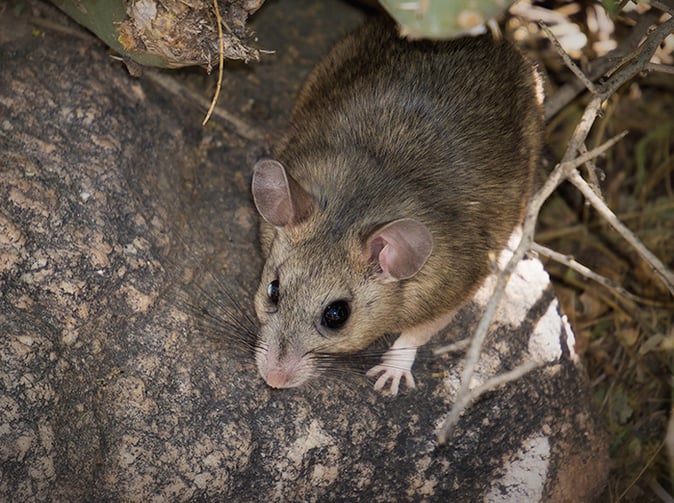
In Phoenix, Tucson, and throughout Southern Arizona, roof rats and pack rats are common. They’re agile climbers, active after dark, and capable of squeezing through openings as small as ½ inch. Once inside an attic, they rarely leave on their own.
How Do You Get Rid of Rats in the Attic?
The most effective way to get rid of rats in the attic is a two-step approach: remove the active rodents and complete a full structural exclusion to seal entry points.
Addressing only one is why many attic rodent problems return.
If You Suspect Rats in the Attic: What to Do Next
This is the clear, practical plan for homeowners who want the problem resolved — not temporarily masked.
Step 1: Confirm the Signs
Common indicators of attic rat activity include:
- Scratching, scurrying, or thumping noises after dark
- Droppings near attic access points, in garages, or along walls
- Shredded insulation or stored materials
- A strong, musky odor in enclosed spaces
- Gnaw marks on wiring, wood, or storage items
If you’re hearing activity at night, it’s rarely “just one rat.” Roof rats and pack rats are social and can establish nests quickly.
Step 2: Understand Why DIY Often Fails
Many homeowners try traps or repellents first. The problem? Attic rat issues in Arizona are usually structural.
The real issue is typically:
- Roofline access via trees, fences, or utility lines
- Multiple entry points along tile roofs or roof returns
- Gaps around vents, soffits, fascia, or penetrations
- Closing one visible hole without identifying all entry routes often redirects rodent activity — it doesn’t stop it.
Repellents may temporarily alter behavior, but they don’t remove established nests or seal structural gaps.
Without a complete plan, attic rat problems frequently restart.
Step 3: Schedule a Professional Inspection That Covers Removal AND Full Exclusion
The fastest path to a lasting solution is a detailed inspection that identifies:
- How rats are reaching your roofline
- Where they are entering the attic
- Structural vulnerabilities specific to your home
- A removal strategy
- A complete exclusion plan to prevent reinfestation
At Northwest Exterminating, inspections focus on both elimination and long-term prevention — because addressing only one leads to recurring problems.
If you want to understand what proper exclusion entails, visit our Rodent Exclusion Guide.
Step 4: Reduce Outdoor Attraction While Waiting for Service
This won’t remove rats already inside, but it can reduce ongoing attraction:
- Bring pet food indoors at night
- Secure trash lids
- Pick up fallen citrus and fruit
- Reduce dense vegetation near exterior walls
- Move clutter away from the foundation
In Southern Arizona neighborhoods, outdoor food sources and dense vegetation near the home can increase rodent pressure.
Step 5: After Removal, Complete a Thorough Seal-Up
This is where many infestations repeat.
A lasting solution depends on identifying and sealing all structural access points — not just patching one gap.
Why Rodent Exclusion Matters
Roof rats and pack rats are persistent climbers. If even a small opening remains, they will find it.
Desert Guard, our Arizona-specific exclusion program, is designed around common vulnerabilities in Phoenix and Tucson homes — including tile roofs, roof returns, vents, penetrations, and transition gaps.
Desert Guard includes:
- Detailed exterior inspection
- Professional-grade sealing materials
- Reinforcement of high-risk areas
- Weephole protection
- Weatherproofing around structural gaps
Most repeat attic infestations happen because entry points were missed. Desert Guard is built to prevent that.
View service details: Desert Guard
Roof Rats vs. Pack Rats: What’s Most Common in Arizona Attics?
Southern Arizona homeowners most commonly encounter:
Roof Rats
Agile climbers that travel along trees, fences, and rooflines. The University of Arizona Cooperative Extension notes that roof rats have expanded throughout Phoenix and surrounding communities, thriving in neighborhoods with mature landscaping and accessible food sources.
See: Roof Rats: Identification, Ecology, and Signs
Pack Rats (Woodrats)
Common throughout Southern Arizona. Known for building debris nests and hoarding materials. While often associated with desert environments, they will readily move into attics for protection.
If you suspect pack rats, see our Pack Rats in Southern Arizona guide.
If you’re currently hearing activity, scheduling an inspection sooner rather than later can prevent additional attic damage.
Why Rats Are So Common in Phoenix & Tucson Neighborhoods
Roof rats thrive where three things exist:
- Climbing routes
- Cover
- Reliable food sources
Many Arizona neighborhoods provide all three.
Mature citrus trees, dense landscaping, block walls, pergolas, and tile roofing create ideal access pathways to rooflines. Once elevated, rats look for quiet, insulated shelter — and attics provide precisely that.
How Rats Get Into Arizona Attics
Most entry points are above eye level and easy to overlook.
Typical attic access points include:
- Gaps in roof returns and roofline transitions
- Openings beneath tile edges
- Damaged or poorly screened vents
- Gaps around plumbing and utility penetrations
- Separated fascia boards or soffits
- Construction gaps in older homes
Also watch for what we call “highway access”:
- Tree branches touching the roof
- Fences or pergolas connected to the home
- Utility lines leading directly to roof edges
These routes are often the starting point.
Rat Prevention Tips for Arizona Homes
After active activity is resolved, prevention focuses on access and attraction.
Roofline & Exterior (Highest Impact)
- Trim branches away from the roof
- Ensure vents are properly screened
- Seal gaps around penetrations
- Repair separated roofline materials
Yard & Food Sources
- Pick up fallen fruit promptly
- Store bird seed securely
- Avoid leaving pet food outdoors
- Reduce dense vegetation against exterior walls
Storage
- Use sealed bins in attics
- Avoid storing cardboard or soft nesting materials
For help identifying the species, visit our Rats pest ID page first.
After Rats Are Gone: Cleanup Considerations
Droppings and nesting materials can pose health risks if mishandled.
For general safety guidance, see:
If insulation has been heavily soiled, professional remediation may be recommended.
Long-Term Protection: SMART Monitoring
For homeowners who want ongoing protection, Northwest Exterminating offers SMART digital rodent monitoring.
This technology allows for early detection of rodent activity — helping prevent large-scale attic infestations before they develop.
It’s one of the most proactive rodent control approaches available in Southern Arizona.
Learn more about this and other solutions here: Rodent Control Services.
Attic Rat FAQs for Arizona Homeowners
Do rats leave an attic on their own?
Activity may temporarily stop, but if entry points remain accessible, reinfestation is common.
Are ultrasonic repellents enough?
Not really. Repellents and other DIY methods don’t solve an active attic problem. Long-term control typically comes from removal plus a full seal-up.
How long does it take to resolve a rat problem in the attic?
Timelines vary based on how many entry points exist and how easy they are to access. Many homeowners see faster progress when removal and exclusion are addressed as one plan.
When to Call for Professional Rodent Control
f you’re hearing noises in the attic, seeing droppings, or noticing gnaw damage, don’t wait. Rodent populations grow quickly — and attic damage can escalate fast. For example, rats commonly chew electrical wiring (which can lead to fires), contaminate insulation, and damage ductwork in attics.
For over 30 years, Northwest Exterminating has helped Phoenix, Tucson, and Southern Arizona homeowners eliminate and prevent rat infestations with comprehensive removal and exclusion strategies.
If you’re unsure where rats are getting in, the most efficient next step is a professional inspection that covers both elimination and a complete exclusion plan.
Schedule your inspection today and stop attic rat activity for good.
Originally published January 27, 2025. Updated February 2026 for accuracy and expanded Arizona rodent guidance.

Testimonials
Request Your FREE Estimate
Have questions or need help getting rid of pests? Simply complete the form below or give us a call!
Pest Solutions For Homes & Businesses
Northwest Exterminating provides pest control services in the Phoenix metro and Tucson, as well as throughout Southern Arizona, that target pests found in our region's unique desert environment. We promise personalized service and state-of-the-art techniques for all your exterminating needs.
Any Pest, On Time, Guaranteed.








Northwest Exterminating Blog & News

Could El Niño Affect Pest Activity in Phoenix and Tucson This Fall and Winter?
Common Bathroom Pests in Phoenix, Tucson, and Southern Arizona