What Arizona Homeowners Should Know About Hantavirus and Deer Mice
A recent hantavirus outbreak aboard a cruise ship has made headlines this month. Health officials are still investigating the situation, including whether prolonged close contact may have contributed to additional infections among passengers.
That outbreak involved the Andes strain — a rare hantavirus found in South America and the only known strain linked to person-to-person spread. It is not found in the United States.
Here in Arizona, the primary concern is Sin Nombre virus, which is carried by deer mice. Unlike the Andes strain, Sin Nombre virus has not been shown to spread from person to person in the U.S. Instead, infections happen through exposure to contaminated rodent environments.
That’s why keeping mice out of your home is one of the most effective ways to reduce risk.
At Northwest Exterminating, we've been helping Arizona homeowners deal with rodent problems since 1990. With recent increases in hantavirus cases across the state, many homeowners have questions about the risks and how to better protect their homes.
How People Catch Hantavirus in Arizona
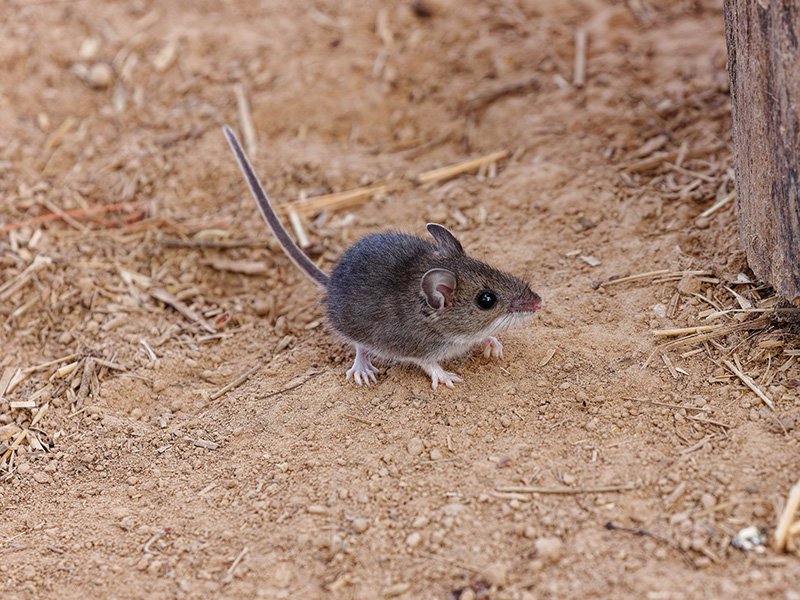
Deer mice are the primary carriers of Sin Nombre virus in Arizona. The virus is found in their droppings, urine, and saliva, and people become infected when they breathe in tiny contaminated particles — often without ever seeing a mouse.
One of the most common scenarios happens when someone opens a garage, shed, casita, RV, or storage building that has been closed up for a while. Sweeping, moving boxes, or disturbing hidden nesting areas can release contaminated particles into the air.
Most hantavirus infections in Arizona are linked to exposure to deer mouse droppings or nesting areas inside enclosed spaces.
Early symptoms often resemble those of the flu, including fever, fatigue, and muscle aches. But hantavirus pulmonary syndrome (HPS) can turn severe quickly, and serious respiratory symptoms may require hospitalization. There is no specific cure or vaccine for HPS, which makes prevention especially important.
Many homeowners never realize mice have been active until a professional inspection uncovers hidden nesting or contamination.
Why Arizona Sees More Hantavirus Risk Than Many States
Arizona has seen a noticeable increase in hantavirus cases in recent years. Between 2016 and 2022, the state reported 11 confirmed cases with four deaths — mostly in northern counties like Apache, Coconino, and Navajo near the Four Corners region, where hantavirus was first identified in 1993.
Cases increased again in 2023 and 2024, prompting Arizona health officials to issue additional public awareness alerts.
While hantavirus is often associated with rural areas, deer mice are active across much of Arizona. We regularly find rodent activity in Phoenix-area neighborhoods, Tucson foothills communities, Queen Creek developments, and homes near open desert areas throughout Southern Arizona.
In older Tucson neighborhoods, deer mice commonly nest in garages, sheds, and block wall voids. In newer communities around Gilbert, Queen Creek, and North Phoenix, we often find activity around attic spaces, rooflines, and utility penetrations where small construction gaps give rodents access indoors.
When Arizona Homes Face the Highest Rodent Pressure
Arizona’s mild winters allow deer mice to stay active year-round, but we typically see increased rodent activity during fall and early winter as cooler nighttime temperatures push mice indoors.
Spring and early summer bring another common risk period. Homeowners begin reopening sheds, RVs, casitas, and storage spaces that may have sat closed for months with hidden rodent activity inside.
Monsoon season can also increase pressure around homes. Heavy rain may flood burrows and drive rodents closer to structures looking for dry shelter.
If you plan to open or clean a space that has been sealed for an extended period, it’s a good idea to have the area inspected for rodent activity first.
Common Places Deer Mice Hide in Arizona Homes
In many Arizona homes, we find rodent activity long before homeowners ever see a mouse.
Deer mice are nocturnal and usually stay hidden in quiet, low-traffic areas. Common hiding spots include garages, attics, utility rooms, storage areas, HVAC spaces, and block wall voids.
Homeowners often first notice signs like droppings, gnaw marks, scratching sounds at night, or damaged stored materials.
During inspections, we regularly uncover hidden nesting activity inside attic insulation, behind stored boxes, near ductwork, and inside wall cavities. Outside the home, woodpiles, decorative rock beds, overgrown vegetation, and dense landscaping can all provide shelter close to entry points.
For more information about where mice hide inside Arizona homes, visit our guide on common rodent hiding spots.
How Our Local Team Rodent-Proofs Arizona Homes
Traps and bait stations can help reduce rodent activity, but they do not solve the problem if mice are still able to enter the structure.
Deer mice can squeeze through openings as small as a dime. Common entry points include rooflines, garage door gaps, vents, utility penetrations, foundation gaps, and openings around eaves.
That’s why long-term rodent control focuses heavily on exclusion — physically sealing off entry points before infestations become larger problems.
Our Desert Guard service is designed specifically for Arizona homes. We begin with a detailed exterior inspection that includes the roofline, vents, windows, garage doors, foundation, and other vulnerable access points. We then seal gaps using materials selected for the home's construction, including screening, weather stripping, expanding cloth, netting, and hardware barriers.
After installation, we complete a quality assurance inspection, and the work is backed by a one-year replacement and labor warranty.
We also offer digital rodent monitoring through Anticimex SMART technology. This intelligent monitoring system continuously tracks rodent activity and alerts our team when activity is detected, enabling faster responses before infestations grow. It is included in our year-round home pest control program.
For many Arizona homeowners, combining physical exclusion through Desert Guard with digital rodent monitoring provides stronger long-term protection.
If you are noticing signs of rodent activity around your Arizona home, having the problem inspected early can help prevent larger issues later.
FAQs About Hantavirus in Arizona
Can deer mice get into Arizona attics?
Yes. Deer mice are excellent climbers and often enter attics through roofline gaps, vents, utility penetrations, or openings around eaves. Attic activity is especially common during cooler months, when rodents move indoors in search of shelter.
Why are rodent problems common around garages?
Garages filled with boxes and clutter make great hiding places, and if they’re easy to access, all the better. Our technicians frequently find activity around stored boxes, water heaters, garage door corners, and wall voids, where small openings allow mice to enter.
Do citrus trees and desert landscaping attract mice?
They can. Fallen citrus, decorative rock beds, dense vegetation, and overgrown landscaping create shelter and food sources near the home. That makes it easier for deer mice to remain active around the property before eventually moving indoors.
Can mice enter through block walls?
Yes. In many Arizona homes — especially older Tucson and Phoenix properties — rodents can move through cracks, weep holes, gaps, and hidden voids inside block construction. These concealed pathways are one reason professional inspections are so important.
Protect Your Home from Deer Mice and Other Rodents
Northwest Exterminating has been helping homeowners across Phoenix, Queen Creek, Tucson, and Southern Arizona protect their homes from rodents for more than 30 years. Whether you need a rodent inspection, want help keeping mice and other rodents out, are interested in digital monitoring, or all of the above, our team is here to help.
Contact Northwest Exterminating today to schedule your free rodent consultation.

Testimonials
Request Your FREE Estimate
Have questions or need help getting rid of pests? Simply complete the form below or give us a call!
Pest Solutions For Homes & Businesses
Northwest Exterminating provides pest control services in the Phoenix metro and Tucson, as well as throughout Southern Arizona, that target pests found in our region's unique desert environment. We promise personalized service and state-of-the-art techniques for all your exterminating needs.
Any Pest, On Time, Guaranteed.


Northwest Exterminating Blog & News

Could El Niño Affect Pest Activity in Phoenix and Tucson This Fall and Winter?
Common Bathroom Pests in Phoenix, Tucson, and Southern Arizona