Life Cycle of Digger Bees
Complete Metamorphosis
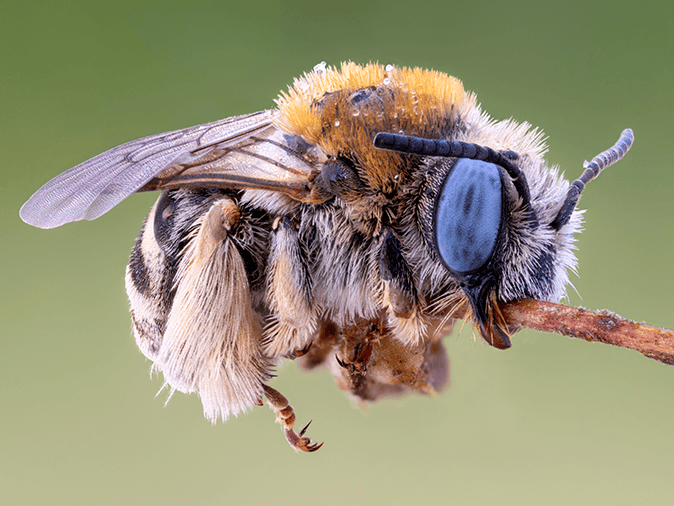
Males will search for females flying over nest sites and resting on plants nearby. Once they have mated, the adult female will lay an egg in a burrow and collect pollen back for the larva to feed on once hatched. The larva will overwinter feeding and maturing. Pupation occurs early spring with emergence beginning of the summer season. These solitary bees will live independently, not depending on a colony for their survival. Adults live about 1 month. One generation occurs per year.
When Are Digger Bees Most Active?
Habits of Digger Bees
- Diet: Adults feed on flower nectar.
- Activity: Typically seen in summer.
- Preferred Climate: Warm
- Defense: Sting. Females only sting.
- Cautions: Will sting if provoked.
- Home Invasion: Female digger bees will infest yards if barren creating small mounds with an opening at the top. In some cases, large clusters will be created of these mounds as this solitary bee will often be living in large clusters (aggregations) when prime conditions exist. This can be intimidating to the homeowner.
Are Digger Bees Dangerous?
Digger bee stings can produce reactions ranging from temporary pain and discomfort to severe allergic reaction.
Where Do Digger Bees Nest?
Digger bees nest in burrows in the ground. Keep an eye out for these bees in garden areas especially.
Helpful Hints for Digger Bees
To discourage digger bees, we recommend properly fertilizing and watering your lawn to promote healthy turf. Targeted insecticide treatment may be necessary if larger populations/aggregations occur to prevent the possibility of being stung.
Interesting fact about digger bees
Digger bees line their underground tunnels with a thin waxy substance.
How Do You Get Rid of Digger Bees?
To get rid of digger bees and other stinging insects, contact Northwest Exterminating at the first sign of a problem. Our locally operated team offers bee removal services in Phoenix and Tucson as well as throughout our Southern Arizona service area.

Testimonials
Request Your FREE Estimate
Have questions or need help getting rid of digger bees or other pests? Simply complete the form below or give us a call!
Northwest Exterminating Blog & News
Rodent Exclusion: How to Keep Rats and Mice Out of Phoenix and Tucson Homes

Could El Niño Affect Pest Activity in Phoenix and Tucson This Fall and Winter?