Earwig Identification
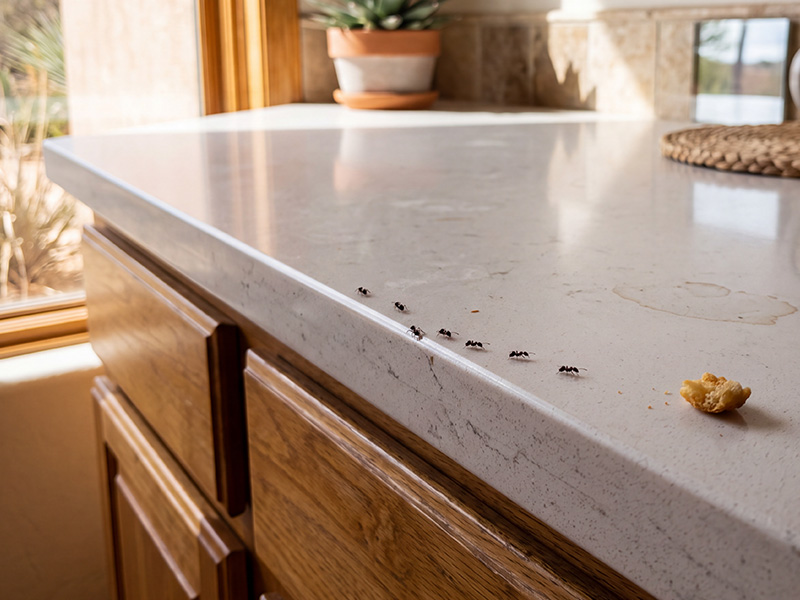
Earwigs are small, dark-colored insects recognized by the pincers on the end of their abdomen. While they typically live outdoors, earwigs can become a nuisance for Arizona homeowners, especially in Tucson and Phoenix, when heat, irrigation, or seasonal moisture drive them indoors.
What Does an Earwig Look Like?
Appearance
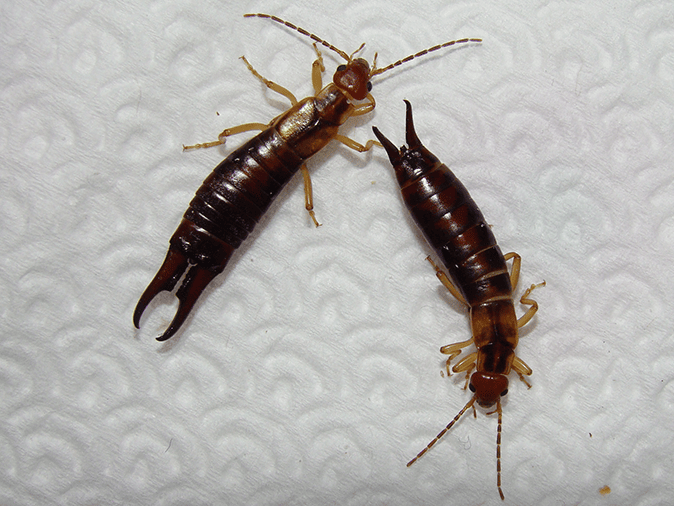
- Size: About ½ to 1 inch long.
- Color: Reddish-brown to dark brown.
- Distinct feature: Curved pincers (forceps) at the rear of the body.
The pincers are used mainly for defense and mating and are not dangerous to people.
When are earwigs most active?
What Do Earwigs Eat?
Earwigs are scavengers that feed on a mix of plant material and insects. Outdoors, they commonly eat:
- Decaying leaves and organic matter.
- Algae and mold in damp areas.
- Insects and insect eggs.
- Tender plants, seedlings, and garden debris.
Because their food sources are typically found in moist, shaded environments, earwigs are most active around landscaped areas, mulch beds, and irrigation zones near the home.
Are Earwigs Dangerous?
Earwigs are not considered dangerous to humans or pets.
- They do not spread disease.
- They do not intentionally bite.
- They may pinch if handled, but they are typically a nuisance pest rather than a safety concern.
- Some species squirt an odorous liquid as a defense; however, it is not dangerous.
Do Earwigs Actually Go in Your ear?
Although earwigs have a reputation for crawling through the external auditory canal in order to lay eggs and/or eat a persons' brains, this is simply not true.
Why are Earwigs Found in Homes?
Earwigs prefer moist, shaded outdoor areas. They usually get inside by accident when outdoor conditions change or when the area around a home provides easy shelter.
Common reasons earwigs come indoors include:
- Extreme heat (common in Tucson and the Phoenix metro)
- Increased moisture from monsoon rains or overwatering
- Damp zones near foundations, door thresholds, and window frames
- Small gaps and cracks that provide easy entry
In most cases, seeing earwigs indoors means there’s an outdoor population nearby, and the key is to reduce the conditions that support them around the perimeter.
Where Are Earwigs Commonly Found?
Inside the home
Earwigs are most often found in areas that stay cool or damp.
- Bathrooms and kitchens
- Laundry rooms
- Under sinks and near drains
- Garages and utility rooms
Outside the home
Outdoors, earwigs seek shelter during the day and become more active at night.
- Mulch beds and landscaping
- Potted plants and planters
- Beneath rocks, woodpiles, and debris
- Around irrigation lines and shaded patios
Earwig Activity in Arizona
In Southern Arizona, earwig activity is often most noticeable:
- During the hottest months of the year
- After monsoon rainfall
- In landscapes with frequent watering or dense ground cover
Homes with shaded landscaping, damp soil near the foundation, or small entry gaps tend to see more frequent indoor sightings.
How to Help Prevent Earwigs
Basic prevention steps focus on reducing moisture and limiting access points around the home:
- Reducing excess moisture around the home, including fixing leaks and adjusting irrigation.
- Keeping mulch, soil, and plants several inches away from the foundation.
- Sealing cracks, gaps, and openings around doors, windows, and utility penetrations.
- Limiting outdoor lighting near entryways when possible to reduce insect activity near doors.
- Removing debris, leaf litter, and unused planters near the home.
For homeowners who don’t have the time, tools, or ability to fully pest-proof their home, Northwest’s Desert Guard exclusion service offers a proactive alternative. Desert Guard focuses on identifying and sealing common entry points, helping prevent earwigs and other pests, such as scorpions and rodents, from getting inside in the first place.
Earwig Control in Phoenix, Tucson & Southern Arizona
Northwest Exterminating helps homeowners in Phoenix, Tucson, and Southern Arizona eliminate and prevent earwig activity through effective, ongoing home pest control services. Routine pest treatments ensure these nuisance bugs and other house-infesting pests don’t have the opportunity to sneak inside.
Contact Northwest Exterminating for assistance today.

Testimonials
Request Your FREE Estimate
Have questions or need help getting rid of earwigs or other pests? Simply complete the form below or give us a call!
Northwest Exterminating Blog & News
Why Are Termites Attracted To Bathrooms?
Termite Treatment in Tucson: What to Expect From Inspection to Treatment